

Quick Verdict
The Qutub Shahi Tombs (located in the Qutb Shahi Heritage Park in Hyderabad) are best for history lovers, architecture enthusiasts, photographers, and peaceful family outings.
not skip the Qutb Shahi Tombs if you are visiting Hyderabad, as they are a major historical and architectural landmark. However, some travelers on a very tight schedule wonder if they should skip it compared to the nearby Golconda Fort.
Table of Contents
- Overview
- History & Background
- Architecture & Design
- Key Attractions Inside
- Historical Significance
- Best Time to Visit
- Qutb Shahi Tombs Timings
- Entry & Additional Fees
- Entry Fee & Tickets
- How to Reach
- Photography Rules
- Time Required
- Nearby Attractions
- Where to Stay & Eat
- Suggested Visit Itinerary
- Frequently Asked Questions
- Related Guides
Overview
Royal mausoleums and historic gardens define Qutb Shahi Tombs, a heritage complex near Golconda Fort in Hyderabad, Telangana. The site is known for the burial places of Qutb Shahi rulers and its blend of Persian, Islamic and Deccan architectural traditions.
The wider Qutb Shahi Heritage Park covers approximately 106 acres. Its historic structures include 40 mausoleums, 23 funerary mosques, six stepwells, a traditional mortuary bath, pavilions and garden features. These buildings date mainly from the sixteenth and seventeenth centuries.
The complex stands near Golconda Fort, making it easy to include in a wider heritage tour of Hyderabad. Visitors can walk through landscaped grounds, study decorated domes and arches, and see the tombs of members of the royal family.
The site suits history enthusiasts, architecture students, photographers and travellers interested in Hyderabad's early history. The restored gardens provide space to walk between the monuments. However, the grounds are extensive, and some paths near historic structures have uneven surfaces. Visitors with limited mobility should plan their route carefully.
History & Background
The Qutb Shahi Tombs preserve the burial history of a dynasty that ruled parts of the Deccan from 1518 to 1687. Sultan Quli Qutb Shah established the dynasty, and its rulers developed Golconda into a major political centre before Hyderabad became their capital. The tomb complex grew over several generations.
The earliest royal tombs date to the sixteenth century. Sultan Quli Qutb Shah's tomb dates to 1543, while later structures show changes in the dynasty's architectural style. The tomb of Muhammad Quli Qutb Shah, the ruler who founded Hyderabad in 1591, is among the complex's largest monuments. Royal family members, nobles and other people connected with the court were also buried here.
The dynasty ended after Mughal emperor Aurangzeb captured Golconda in 1687. Over time, the burial grounds suffered from neglect and damage. Restoration work took place under Salar Jung III in the early nineteenth century, according to the Hyderabad district administration.
A major conservation programme began in 2013 through cooperation between the Aga Khan Trust for Culture and the Telangana government. The work included monument repairs, garden restoration and improvements to historic water systems. The restored Qutb Shahi Heritage Park was formally inaugurated on 28 July 2024.
The Qutb Shahi monuments, including the tombs, appear on UNESCO's Tentative List for World Heritage consideration. This means the group has been proposed for possible future World Heritage nomination, not that it is already a UNESCO World Heritage Site.
Architecture & Design
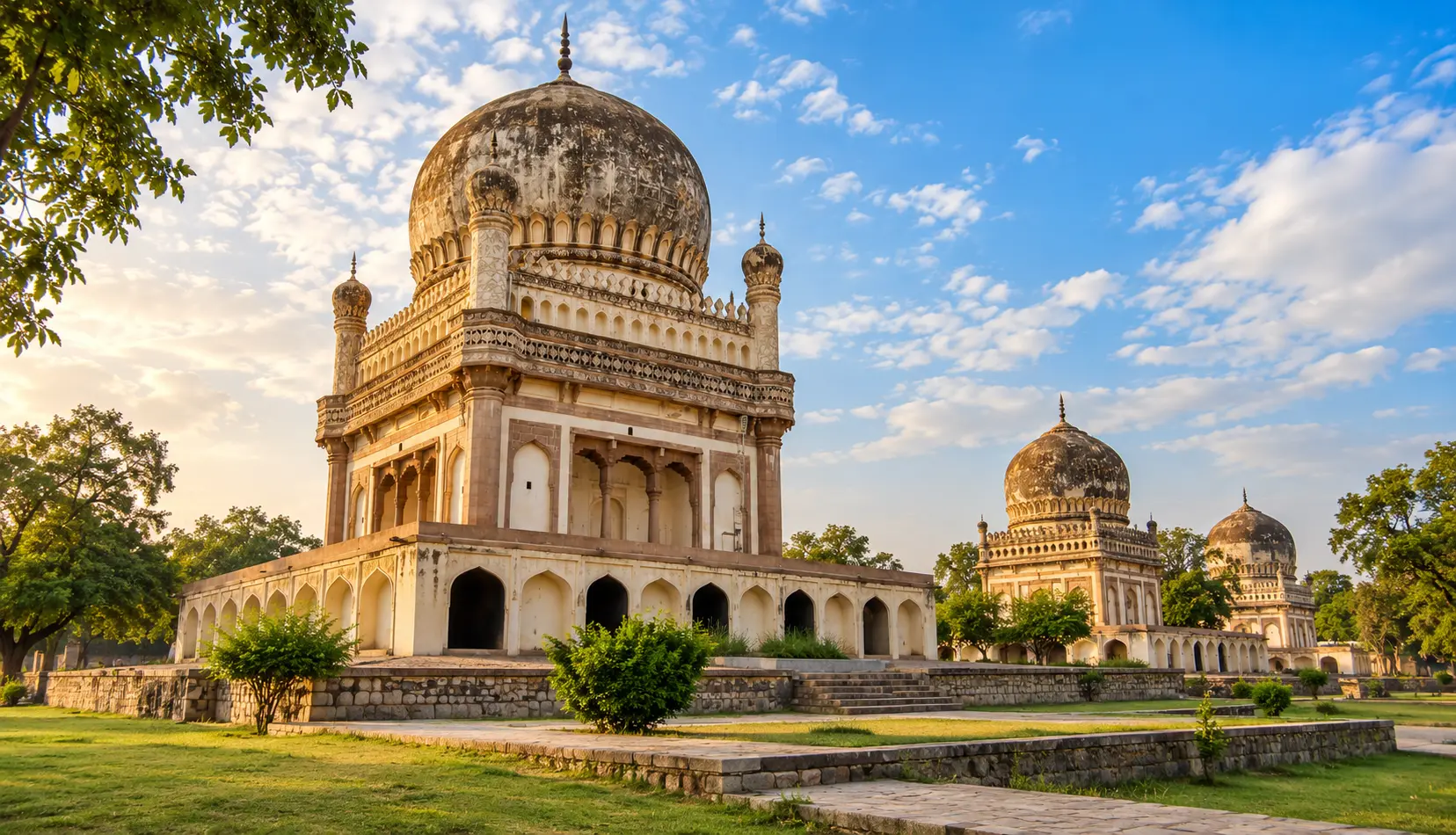
Qutb Shahi Tombs combines royal burial architecture with landscaped gardens and supporting structures. Builders used grey granite, plaster decoration, domes, pointed arches and minarets. The designs reflect Persian, Islamic and Deccan influences that developed under the Qutb Shahi rulers.
Many tombs stand on raised square platforms. Their central chambers sit beneath large domes, while some structures have two storeys. Smaller tombs generally have simpler, single-storey forms. The height and scale vary across the complex, reflecting differences in the status of the people buried there.
The tomb of Muhammad Quli Qutb Shah is one of the most prominent buildings. Other tombs show changes in design over the dynasty's history. The tomb of Jamsheed Quli Qutb Shah has an unusual two-storey octagonal plan, while the tomb of Abdullah Qutb Shah represents a later stage of the architectural style.
The wider heritage park also contains funerary mosques, stepwells, a mortuary bath and garden structures. Stepwells are deep structures designed to provide access to stored water. A mortuary bath was used in preparing bodies for burial. Restored pathways, water features and planted areas now connect many of the monuments.
Key Attractions Inside
Tomb of Muhammad Quli Qutb Shah: This large royal mausoleum belongs to the ruler who founded Hyderabad in 1591.
Tomb of Sultan Quli Qutb Shah: Dating to 1543, this tomb represents an early stage of Qutb Shahi royal architecture.
Tomb of Jamsheed Quli Qutb Shah: Its unusual two-storey octagonal plan distinguishes it from the more common square tomb designs.
Tomb of Abdullah Qutb Shah: This later royal mausoleum displays the developed architectural style of the Qutb Shahi period.
Cluster of Smaller Tombs: The heritage park contains 21 smaller tombs associated with nobles, ministers and possible royal family members.
Historic Stepwells: The restored water structures show how the historic settlement stored and managed water within the wider comple
Historical Significance
Qutb Shahi Tombs is important because it preserves the burial places of rulers and members of a major Deccan dynasty. The monuments provide evidence of changes in royal architecture between the sixteenth and seventeenth centuries. Their inscriptions also help researchers connect particular buildings with historical figures and dates.
The complex is unusual because several generations of the same ruling family were buried within one area. UNESCO's Tentative List describes the site as an important example of a royal burial complex, with tombs spanning about 130 years between 1543 and 1672.
The buildings also reflect Hyderabad's political and cultural development. The Qutb Shahi rulers supported architecture, religious institutions and court life across the region. Their capital first centred on Golconda and later expanded to Hyderabad, founded by Muhammad Quli Qutb Shah in 1591.
Conservation work has helped protect the monuments and restore the gardens. The formal inauguration of the heritage park in July 2024 marked a major step in the site's conservation history. The monument group remains on UNESCO's Tentative List rather than the final World Heritage List.
Best Time to Visit
October to February is a comfortable period to visit Qutb Shahi Tombs because Hyderabad generally has cooler weather during these months. The conditions suit walking between the mausoleums, viewing architectural details and spending time in the gardens.
June to September is another option for visitors who prefer greener surroundings. Monsoon rain brings fresh growth to the landscaped areas, although wet paths can become slippery. Wear shoes with a good grip and take care around uneven ground.
Morning visits allow more time to explore the grounds before the afternoon heat becomes uncomfortable. The park opens at 9:30 a.m. and closes at 5:30 p.m., according to its official visitor information. Arriving earlier in the day also leaves time for a separate visit to nearby Golconda Fort.
Qutb Shahi Tombs Timings
Qutb Shahi Tombs is open daily from 9:30 a.m. to 5:30 p.m., according to the official Qutb Shahi Heritage Park website. The schedule includes weekends and public holidays. Visitors should arrive well before closing to allow time for the larger mausoleums and garden paths.
The park also charges separately for photography and parking. Visitors using cameras or mobile devices should account for the listed photography fee. Professional photography and commercial filming require prior permission, and drones are prohibited.
Entry & Additional Fees
Information Source: Official Website of Qutb Shahi Heritage Park
Entry Fee & Tickets
The official Qutb Shahi Heritage Park visitor information lists an adult admission fee of ₹20 for Indian citizens and ₹10 for children aged 6 to 9. It does not provide a separate foreign visitor price in the published admission table.
Personal photography has a listed fee of ₹50 for cameras and mobile devices, while videography is listed at ₹200. Parking charges are separate. The published rates include ₹30 for two-wheelers and three-wheelers and ₹200 for four-wheelers. Other vehicle categories have separate fees.
Tickets are available through the heritage park's visitor arrangements. Visitors should keep admission and photography charges separate when planning their spending. Professional photography and commercial filming require prior permission from the Department of Heritage Telangana.
How to Reach
By air: Rajiv Gandhi International Airport is Hyderabad's main airport. From the airport, travel by road towards Toli Chowki and Fort Road. The journey time depends on traffic.
By train: Hyderabad Deccan railway station and Secunderabad Junction are major rail connections. Continue by road to Qutb Shahi Heritage Park in western Hyderabad.
By metro: Hyderabad Metro serves parts of the city, but the park does not have a metro station at its entrance. Continue by road from a suitable station.
By bus: Hyderabad's bus network serves the wider city. Choose a service towards Toli Chowki or the Golconda area, then complete the final stretch by local transport.
By road: The official address is Fort Road, Toli Chowki, Hyderabad, Telangana, 500008. Taxis and auto-rickshaws can reach the entrance. Paid parking is available, with separate charges for different vehicle types.
Photography Rules
Personal photography is permitted at Qutb Shahi Heritage Park subject to the published photography fee. The official visitor information lists ₹50 for cameras and mobile devices and ₹200 for videography. Commercial photography and professional camera equipment require prior permission from the Department of Heritage Telangana.
Drones are strictly prohibited inside the heritage park. Visitors must remain on designated paths and avoid climbing, marking or damaging the monuments. These rules protect both the historic structures and visitor safety.
Time Required
Allow around 1 to 2 hours for a basic visit to Qutb Shahi Tombs. This gives you time to walk through the main garden paths, see several major mausoleums and examine the stonework. Telangana Tourism Connect lists a typical visit duration of one hour.
A longer visit suits travellers who want to explore the smaller tombs, mosques, stepwells and restored gardens. The heritage park covers 106 acres, so seeing every structure requires more walking. Visitors combining the site with Golconda Fort should plan a separate time block for the fort.
Nearby Attractions
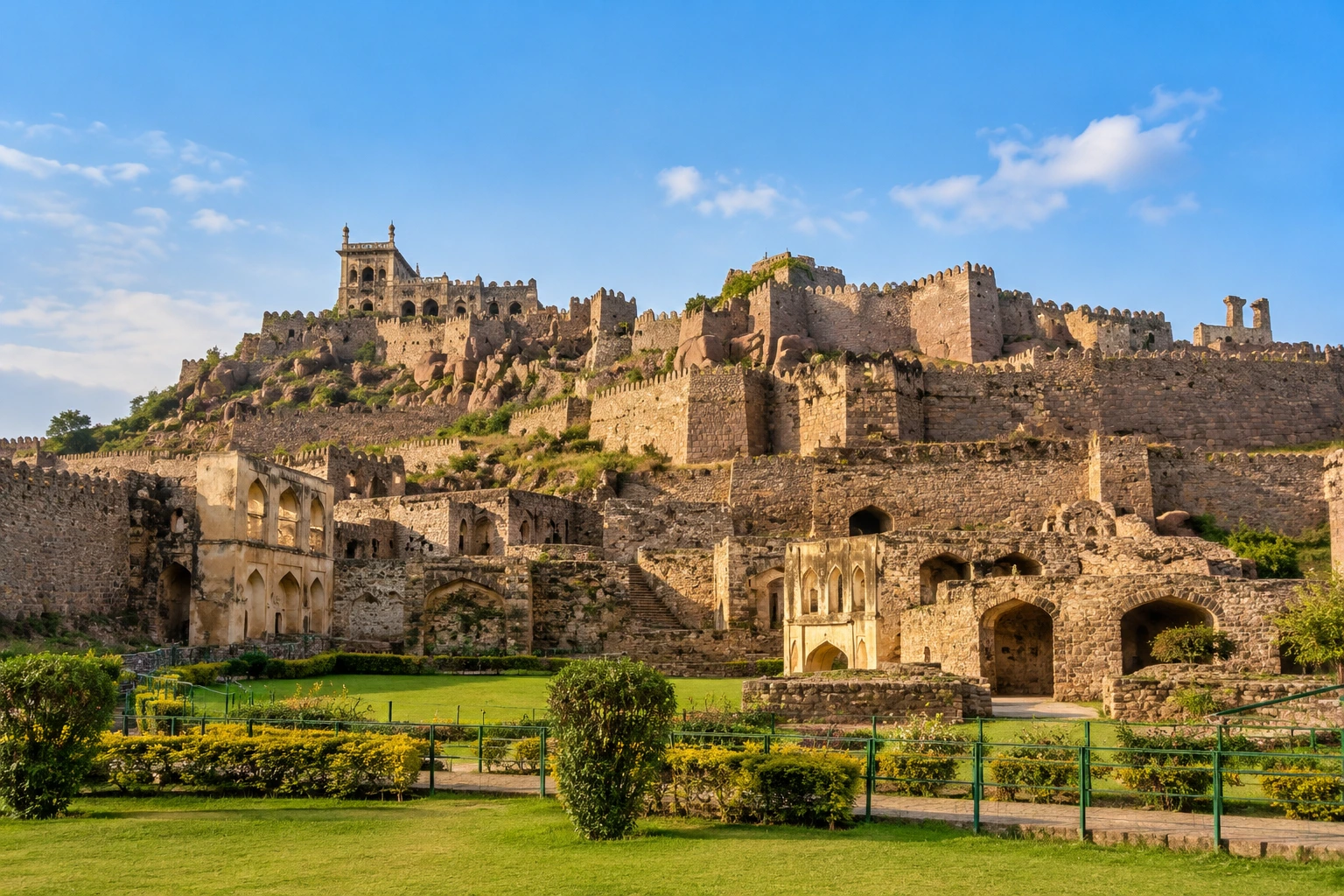
Golconda Fort: A historic hilltop fortress near the tombs, known for its defensive walls and Qutb Shahi history.
Taramati Baradari: A historic pavilion in the wider Ibrahim Bagh area, suitable for a second heritage stop.
Charminar: Hyderabad's landmark with four minarets, located in the city's older centre.
Khazana Building Museum: A museum near Golconda Fort displaying historic artillery, coins, sculptures and archaeological objects.
Where to Stay & Eat
Stay
Budget: Look for budget accommodation around Mehdipatnam for road access to the heritage park and nearby western Hyderabad attractions.
Mid-range: Hotels around Banjara Hills provide access to restaurants and transport links towards Toli Chowki.
Upscale: Hotels in Jubilee Hills provide higher-end accommodation within western Hyderabad, with road connections to the heritage area.
Eat
Qutb Shahi Tombs is a heritage site rather than a dining destination. The official visitor information does not provide a verified list of restaurants or a full menu inside the park. Hyderabad's wider food scene includes several local dishes worth seeking out nearby.
Hyderabadi biryani: A rice dish prepared with spices and meat or vegetables.
Haleem: A slow-cooked dish made with grains, lentils and meat, particularly associated with Ramadan.
Irani chai: Strong tea served in traditional Hyderabad cafes.
Osmania biscuits: Tea biscuits closely associated with Hyderabad's cafe culture.
Suggested Visit Itinerary
First 15 minutes: Enter the heritage park and begin along the designated pathways through the landscaped grounds.
Next 20 minutes: Visit the tomb of Muhammad Quli Qutb Shah and study its large domed structure.
Next 20 minutes: Explore other major royal tombs and compare their platforms, domes and arches.
Next 15 minutes: Walk towards the cluster of smaller tombs and observe the differences in their designs.
Next 15 minutes: View the historic stepwells and garden features where visitor access is permitted.
Final 10 minutes: Return along the visitor paths, take any remaining photographs and leave before closing.