Quick Verdict
Golconda Fort in Hyderabad, India is best suited for history buffs, architecture lovers, and travelers seeking panoramic city views and acoustic engineering marvels.
You should consider skipping or rethinking a visit to Golconda Fort if you have mobility issues, severe joint pain, or low physical stamina, as the climb to the top involves over 350 to 500 steep, uneven stone steps with very little shade.
Table of Contents
- Overview
- History & Background
- Architecture & Design
- Key Attractions Inside
- Historical Significance
- Best Time to Visit
- Timings
- Entry Fee & Tickets
- How to Reach
- Photography Rules
- Time Required
- Nearby Attractions
- Where to Stay & Eat
- Suggested Visit Itinerary
- Golconda Fort Timings
- Golconda Fort Sound and Light Show
- Frequently Asked Questions
- Related Guides
Overview
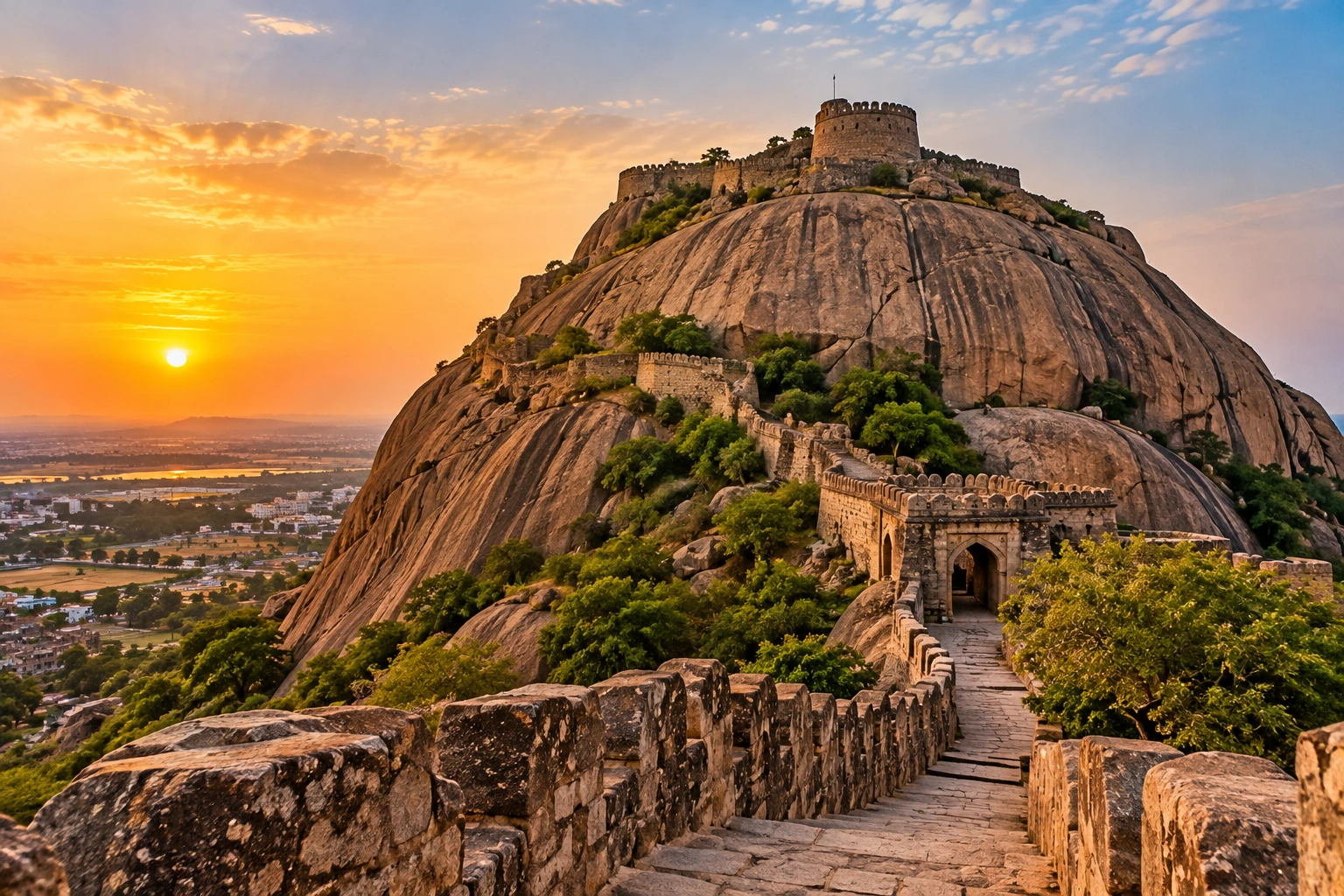
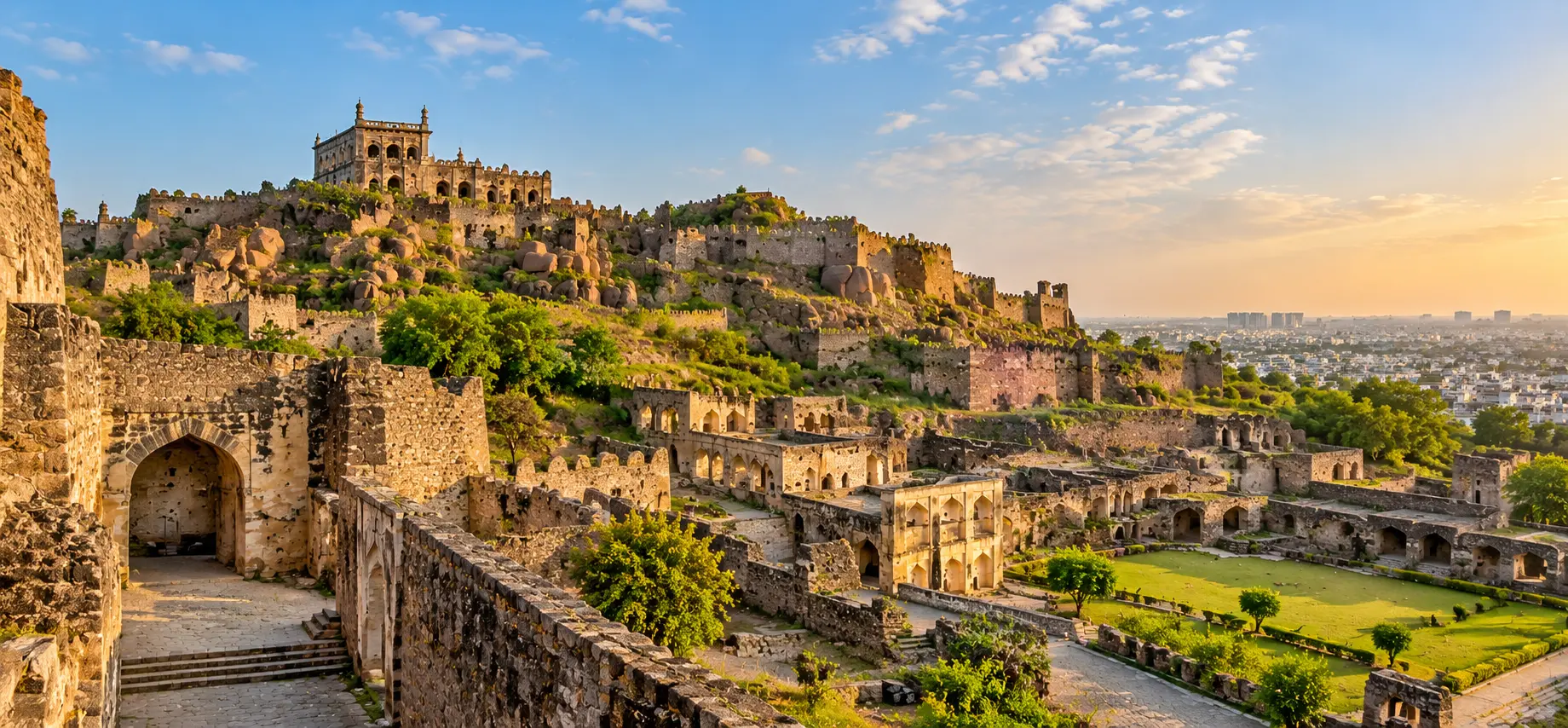
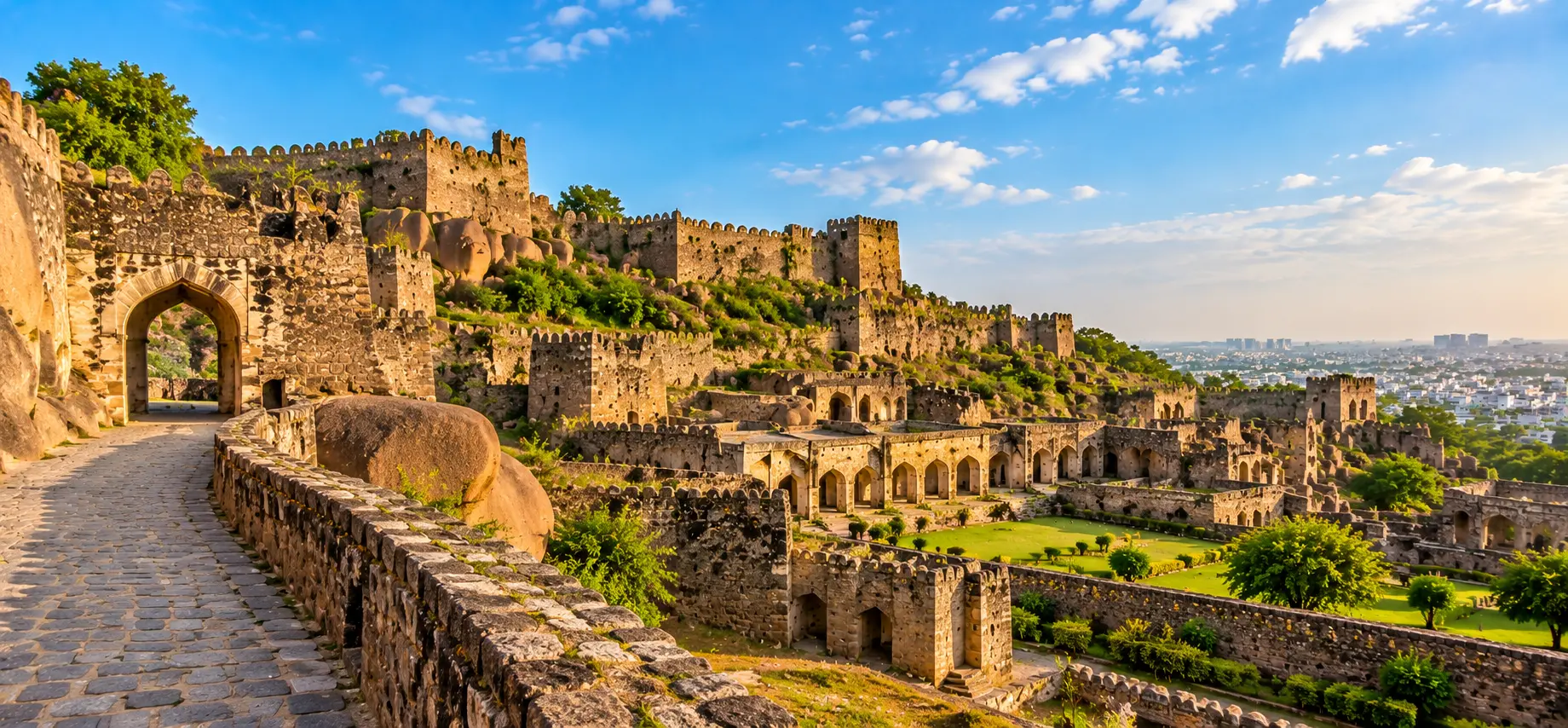
A granite hilltop and a network of defensive walls define Golconda Fort, a historic fortress in western Hyderabad, Telangana. Golconda Fort Hyderabad is known for its links to the Qutb Shahi rulers, its role in regional diamond trading and its unusual acoustic design.
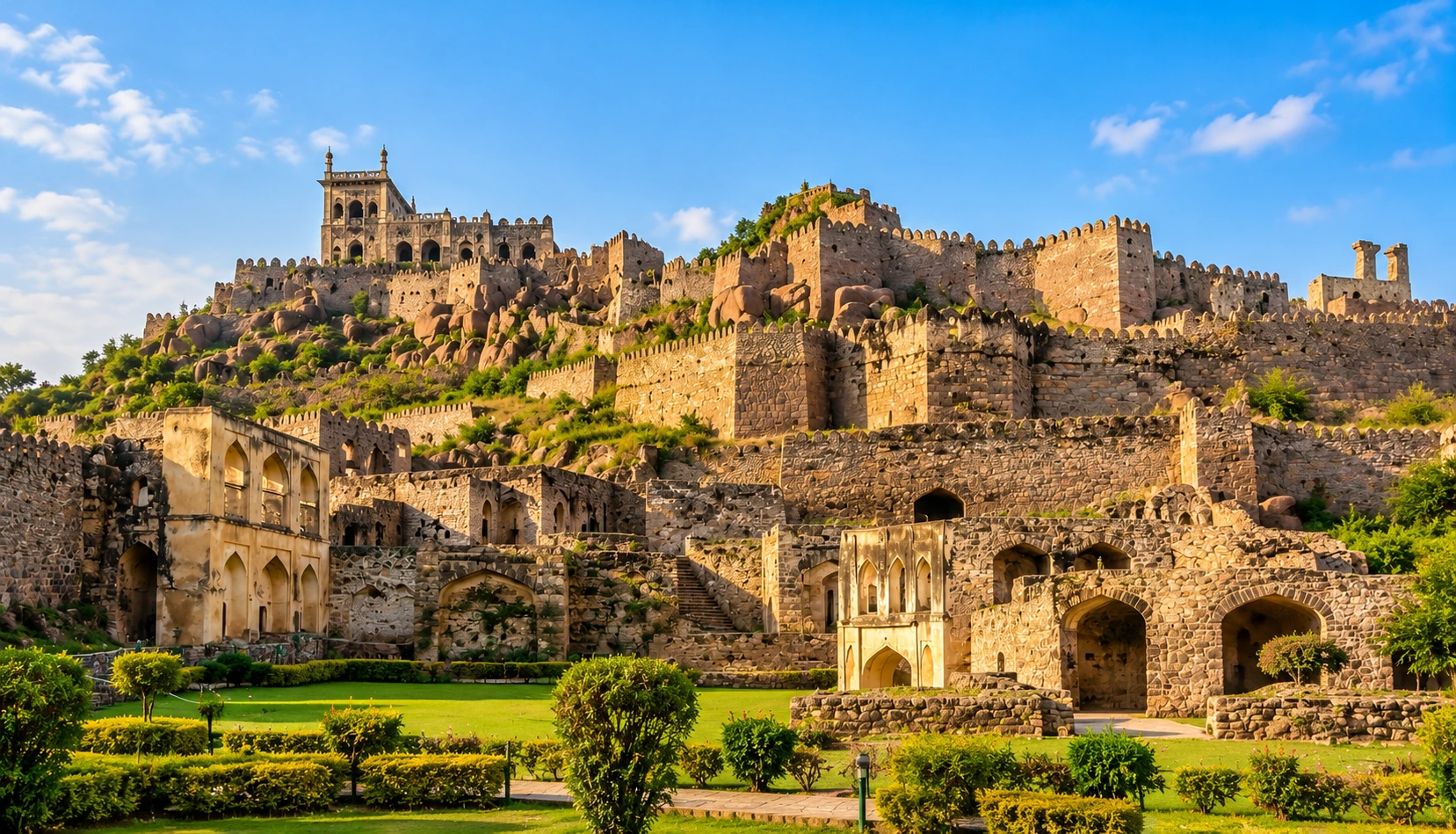
The fort developed from an early mud structure into a large fortified settlement. Its remains include gateways, bastions, royal buildings, mosques, halls and water systems. The outer fort covers about three square kilometres and extends roughly 4.8 kilometres in length, according to the Hyderabad district administration.
Fateh Darwaza, also called the Victory Gate, is one of the most recognised entrances. A clap at a particular point near its entrance can be heard at a pavilion higher up the hill. This feature helped people communicate warnings across the complex.
Visitors can walk through sections of the fort, study its architecture and climb towards the hilltop for views of Hyderabad. The site suits history lovers, photographers and travellers interested in old military structures. However, steep steps, uneven surfaces and Hyderabad's heat can make the climb difficult for some visitors.
History & Background
Golconda Fort began as a mud fort associated with the Kakatiya rulers. Telangana Tourism dates the early settlement to 1143 and records its original name as Mangal. Other official historical accounts describe its early development during the Kakatiya period, so the exact founding date varies across records.
The Bahmani rulers later gained control of the area. After the Qutb Shahi dynasty emerged in the Deccan in the early sixteenth century, Golconda became its principal capital. The rulers strengthened the fort, expanded its defences and developed its royal and administrative areas.
The fortress grew into a fortified settlement containing residential buildings, military structures, religious spaces and systems for supplying water. Its position on a granite hill provided a natural advantage for observing approaching forces. Golconda also became an important centre of diamond trading, linking the region with international commerce.
Mughal emperor Aurangzeb captured the fort in 1687 after a prolonged siege. This ended the Qutb Shahi rulers' control of Golconda. Some palace buildings suffered severe damage following the conquest, and the complex gradually lost its role as a royal capital.
Today, the Archaeological Survey of India protects Golconda Fort as a monument of national importance. The fort forms part of the wider group of Qutb Shahi monuments in Hyderabad. UNESCO has included the Qutb Shahi monuments, including Golconda Fort, on its Tentative List for World Heritage consideration. This is not the same as inscription on the World Heritage List.
Architecture & Design
Golconda Fort combines defensive engineering with the remains of a royal settlement. Its builders used the natural granite hill to create a strong position above the surrounding land. Large stone ramparts, gateways and bastions formed the main defensive system.
The fort's layout includes several layers of walls and enclosures. These controlled movement towards the inner citadel, where royal buildings and administrative spaces once stood. Gates such as Fateh Darwaza served as important entry points. Their heavy construction helped protect the settlement during attacks.
Fateh Darwaza is especially known for its acoustic effect. A clap near a designated point at the entrance can travel towards the Bala Hisar pavilion on the hill. This effect helped transmit warnings through the fortress. It also shows how builders used sound as part of the site's design.
The complex contains remains of palaces, mosques, halls, storage buildings and water systems. Its hydraulic arrangements moved water to higher areas using traditional lifting methods and pipes. These systems supported daily life inside the fortified settlement.
Golconda's architecture reflects influences associated with the Deccan's different ruling periods. Its defensive structures, religious buildings and royal spaces show how military needs and court life shaped the settlement. Many buildings now survive as ruins, so visitors should expect incomplete walls and open spaces rather than fully restored royal interiors.
Key Attractions Inside
Fateh Darwaza: The Victory Gate is known for an acoustic effect that carries a clap towards the upper pavilion.
Bala Hisar Pavilion: This elevated structure stands near the upper part of the fort and provides wide views of the surrounding city.
Royal Palace Complex: The remains show where royal and administrative buildings once stood within the fortified settlement.
Ramdas Bandikhana: This prison area is linked to the local account of Bhakta Ramadas, who was imprisoned under Qutb Shahi rule.
Taramati Mosque: This historic religious structure reflects the Islamic architectural traditions associated with the wider Golconda complex.
Ambar Khana: These storage buildings formed part of the fort's support system for supplies and administration.
Fort Ramparts and Bastions: The stone defences show how the builders used the hill and layered walls to protect the settlement.
Historical Significance
Golconda Fort is important because it served as a major political and military centre in the Deccan. Its development reflects the transition from an early regional fortification to a fortified capital under the Qutb Shahi dynasty.
The rulers strengthened the defences and developed a settlement with royal buildings, religious structures and water systems. The fort also became closely associated with the diamond trade. Golconda was an important trading centre for diamonds mined in the wider region, although the names of individual famous diamonds are not proof that they were stored inside the fort.
The capture of Golconda by Aurangzeb in 1687 marked the end of Qutb Shahi rule. The surviving walls and ruined buildings preserve evidence of the military campaign and the settlement's earlier functions.
Golconda Fort is protected by the Archaeological Survey of India as a monument of national importance. It is also part of the Qutb Shahi monuments group on UNESCO's Tentative List. Together, these records recognise its importance to the architectural and political history of Hyderabad.
Best Time to Visit
October to February is generally the most comfortable period for exploring Golconda Fort. Hyderabad's weather is usually cooler during these months, making the outdoor walk and climb easier than during the hotter part of the year.
Early morning is a practical choice for visitors who want to explore the fort in daylight. Arriving near opening time also helps you begin the climb before temperatures rise and before visitor numbers increase later in the day.
The summer months can bring strong heat, especially on exposed paths and steps. Monsoon weather can make some stone surfaces slippery, so footwear with a good grip is useful.
The sound and light show is an evening option for visitors interested in the fort's history. Show times change by season and language. You can plan a separate evening visit or combine the show with daytime sightseeing when the schedule allows.
Timings
The Hyderabad district administration lists Golconda Fort's visiting hours as 9 a.m. to 5 p.m. Telangana Tourism Connect lists hours extending to 5:30 p.m., with last entry at 5 p.m. Because these published timings differ, the shorter daytime window is the safer planning reference.
The sound and light show runs separately from daytime monument access. Telangana Tourism lists English, Hindi and Telugu presentations, with scheduled times changing between November to February and March to October. Show schedules can also differ from the times displayed on older tourism pages.
Allow enough time to enter and walk through the site before the daytime closing period. Prices, hours and menus can change, so readers should check the official website before they go.
Entry Fee & Tickets
Telangana Tourism Connect lists an entry fee of ₹25 for Indian adults and ₹300 for foreign visitors. These published prices should be treated as the listed rates rather than a guarantee of the current gate charge. The Hyderabad district administration provides opening information but does not show the same ticket breakdown on its main fort page.
The monument ticket and the sound and light show ticket are separate visitor products. A daytime entry ticket should not be treated as including an evening performance.
Ticketing arrangements and show prices can differ by product. The Telangana Tourism sound and light page provides a booking option for the multimedia presentation. If you plan to attend the show, allow for the separate booking and entry process.
How to Reach
By air: Rajiv Gandhi International Airport is Hyderabad's main airport. From the airport, travel by road towards western Hyderabad and the Golconda area. The exact journey time depends on traffic and your starting point.
By train: Hyderabad Deccan railway station, also known as Nampally, and Secunderabad Junction are major railway stations serving the city. From either station, continue by road to the fort.
By metro: Hyderabad Metro serves parts of the city, but there is no metro station at the fort entrance. Use a suitable metro station for your route, then continue by road.
By bus: Hyderabad's city bus network serves the wider Golconda area. Choose a service towards the fort area and complete the last stretch on foot or by local transport.
By road: The fort is in western Hyderabad, near Ibrahim Bagh. Auto-rickshaws, taxis and app-based ride services can take you to the entrance. Travel time depends on traffic and your pickup location.
Photography Rules
Golconda Fort is a historic monument with open courtyards, stone gateways, walls and elevated viewpoints that visitors commonly photograph. The exact current rules for tripods, drones, flash photography, selfie sticks and professional video equipment are not publicly listed in the official visitor information reviewed here.
The monument ticket price listed by Telangana Tourism Connect does not provide a separate camera-fee breakdown. Rules can differ for professional filming or equipment that requires special permission.
Follow any instructions displayed at the entrance and around protected structures. Avoid climbing fragile walls or blocking narrow paths while taking photographs. The hilltop views and Fateh Darwaza area are useful subjects for general travel photography.
Time Required
Allow around 2 to 3 hours for a basic visit to Golconda Fort. This gives you time to pass through the main entrance, explore key ruins and walk towards the higher sections, depending on your pace and access.
Spend additional time if you want to study the defensive walls, inspect the surviving structures or take photographs from several viewpoints. The climb includes uneven stone steps, so the route can take longer for visitors who need frequent rests.
The sound and light show requires a separate evening time slot. If you plan to attend it, include the performance and the time needed between visits in your schedule.
Nearby Attractions
Qutb Shahi Tombs: A royal burial complex with domed tombs and gardens, suitable for a second stop focused on Qutb Shahi history.
Qutb Shahi Heritage Park: A conservation area containing historic tombs, restored gardens and stepwells near the fort.
Taramati Baradari: A historic pavilion associated with Hyderabad's cultural heritage and often included in visits around Golconda.
Hussain Sagar Lake: A large lake in central Hyderabad that provides a different setting after exploring the city's historic monuments.
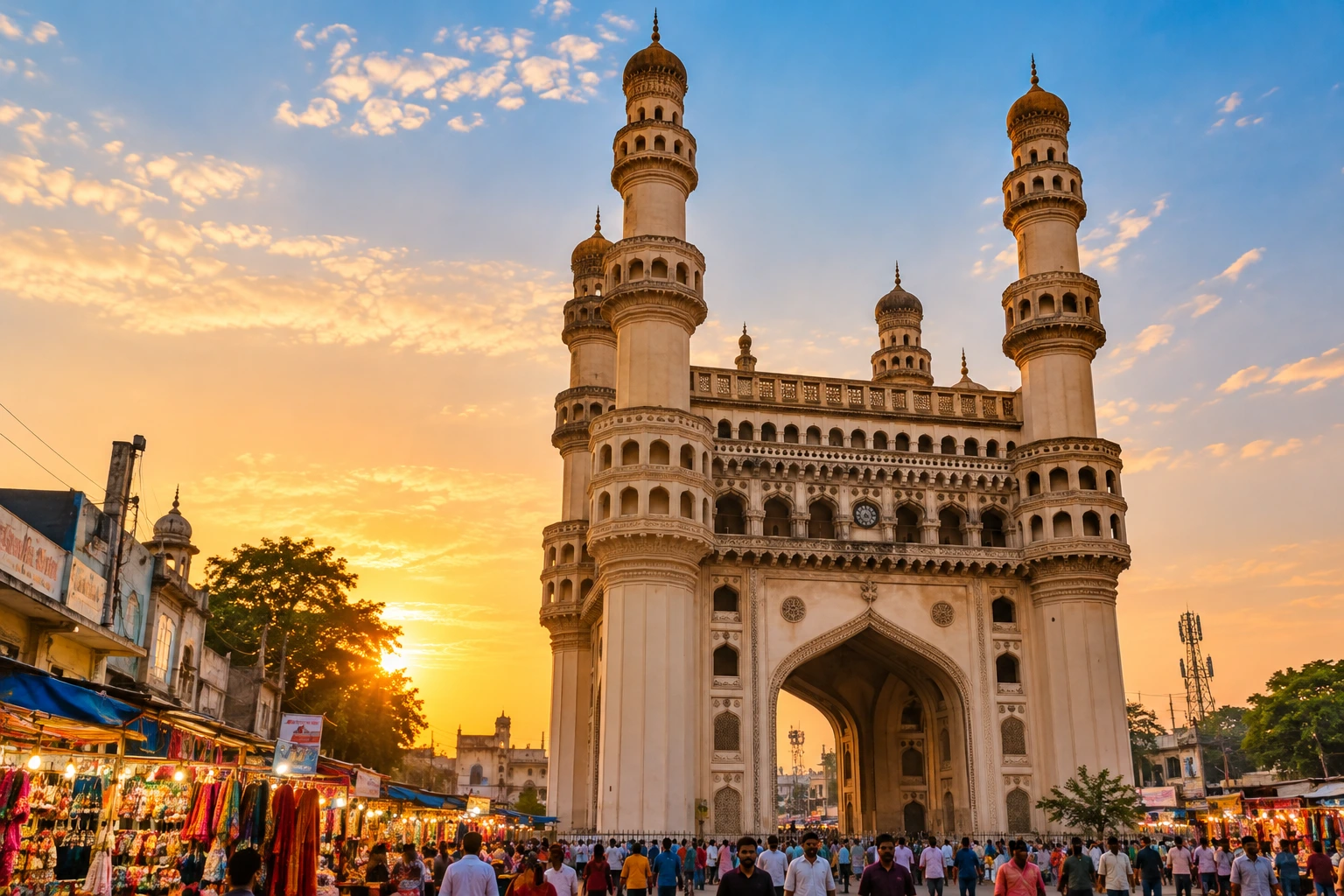
Charminar: A major Hyderabad landmark with four minarets, suitable for a separate visit to the city's older urban centre.
Where to Stay & Eat
Stay
Budget: Hotel stay options in the Mehdipatnam area can provide road access towards Golconda and other western Hyderabad destinations.
Mid-range: Hotels around Banjara Hills provide access to restaurants and road connections towards the fort.
Upscale: Hotels in the Jubilee Hills area provide higher-end accommodation options within western Hyderabad.
Eat
Golconda Fort is a historic monument rather than a restaurant destination. Food options inside the monument are not clearly documented in the official visitor information. Plan a meal in the wider Hyderabad area before or after the visit.
Hyderabadi biryani: A rice dish cooked with spices and meat or vegetables, widely associated with Hyderabad.
Haleem: A slow-cooked dish made with grains, lentils and meat, especially associated with Ramadan in Hyderabad.
Irani chai: Strong tea commonly served in Hyderabad's traditional cafes.
Osmania biscuits: Popular tea biscuits associated with Hyderabad's cafe culture.
Suggested Visit Itinerary
First 15 minutes: Arrive at the entrance, complete ticketing and begin the visit through the main access area.
Next 25 minutes: Explore Fateh Darwaza and learn about the gate's role in the fort's defensive system.
Next 30 minutes: Walk through the accessible sections of the fort and inspect the surviving walls, bastions and storage structures.
Next 30 minutes: Continue towards the inner fort and view the remains of royal buildings and religious structures.
Next 30 minutes: Climb towards the upper pavilion if the route is accessible and your fitness allows.
Final 15 minutes: Return carefully, take any remaining photographs and leave the monument before closing.
Golconda Fort Timings
Golconda Fort's daytime visiting hours are listed as 9 a.m. to 5 p.m. by the Hyderabad district administration. Telangana Tourism Connect lists a closing time of 5:30 p.m. and last entry at 5 p.m., so visitors should plan around the earlier closing time.
The fort's outdoor routes take time to explore, particularly if you want to climb towards the upper pavilion. Starting early gives you more daylight and helps you avoid the strongest afternoon heat. The sound and light show follows a separate evening schedule and should not be confused with daytime monument hours.
Telangana Tourism lists different show times by season. From November to February, the listed presentations begin at 6:30 p.m. in English, 7:15 p.m. in Hindi and 8 p.m. in Telugu. From March to October, the listed times are 7 p.m., 7:45 p.m. and 8:30 p.m., respectively.
Golconda Fort Sound and Light Show
The Golconda Fort sound and light show presents the fort's history through narration, lighting and multimedia effects. Telangana Tourism lists English, Hindi and Telugu presentations, with different start times depending on the season.
From November to February, the listed showtimes are 6:30 p.m. for English, 7:15 p.m. for Hindi and 8 p.m. for Telugu. From March to October, the listed times are 7 p.m. for English, 7:45 p.m. for Hindi and 8:30 p.m. for Telugu.
The show has a separate booking option through the Telangana Tourism website. Its ticket should be treated separately from the daytime monument entry fee. Visitors who want to see both the fort and the show should plan for the gap between daytime closing and the performance, along with transport and seating arrangements.