Quick Verdict
Bhongir Fort is best known as a quick, thrilling weekend trek and historical day trip located about 47–50 km from Hyderabad.
You might want to skip Bhongir Fort if you face physical limitations, severe weather conditions, or are looking for a relaxed sightseeing trip.
Table of Contents
Overview
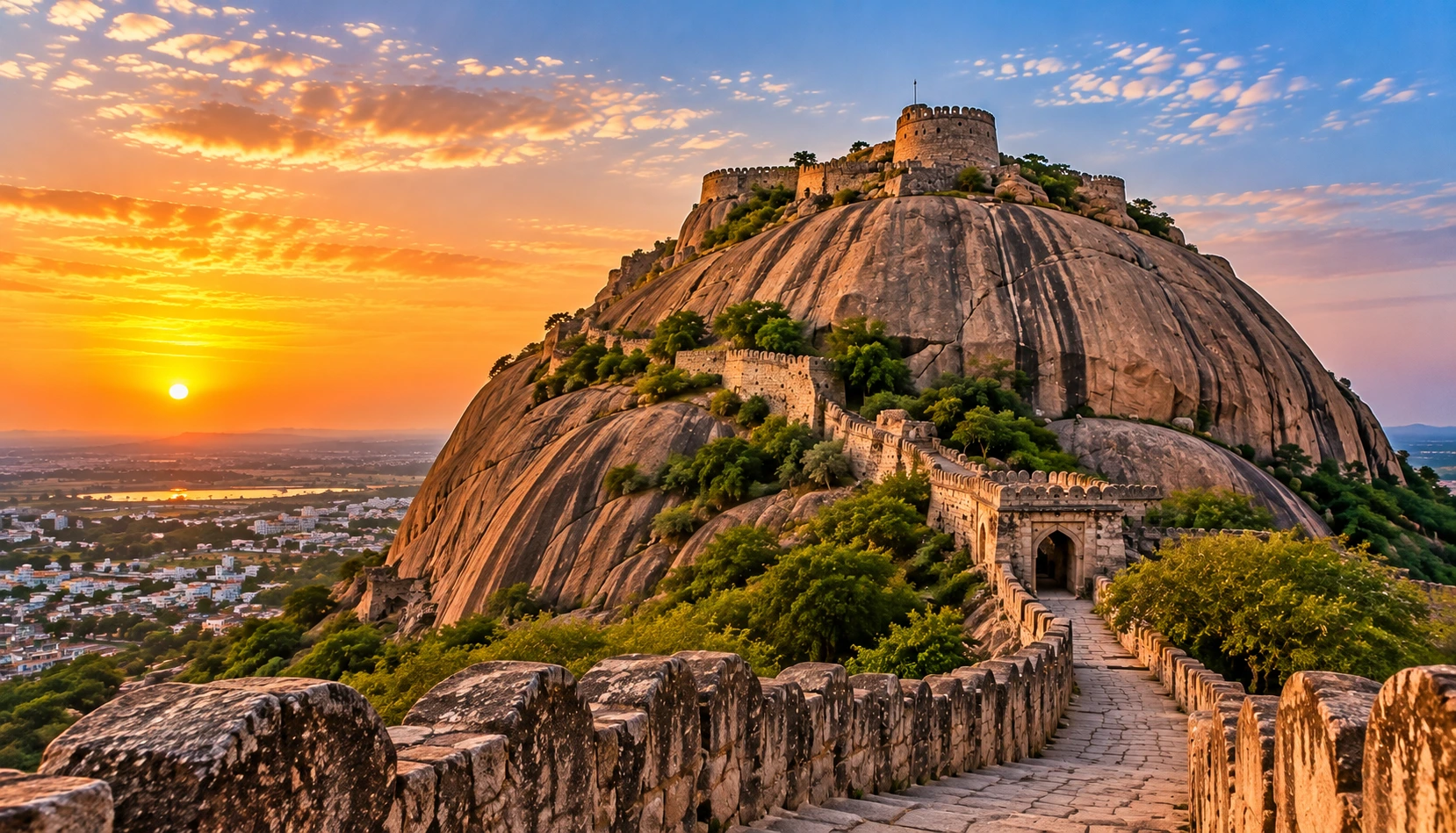
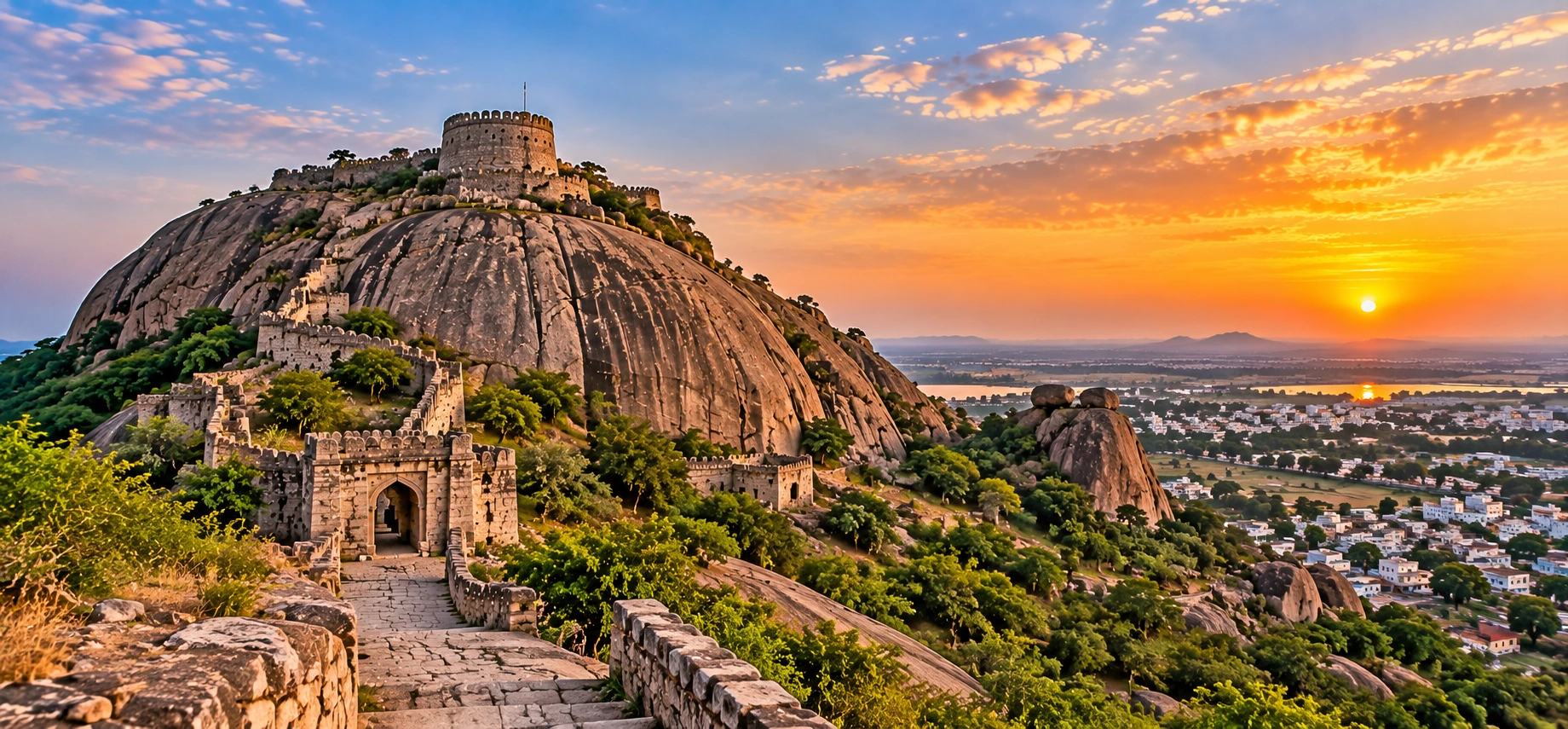
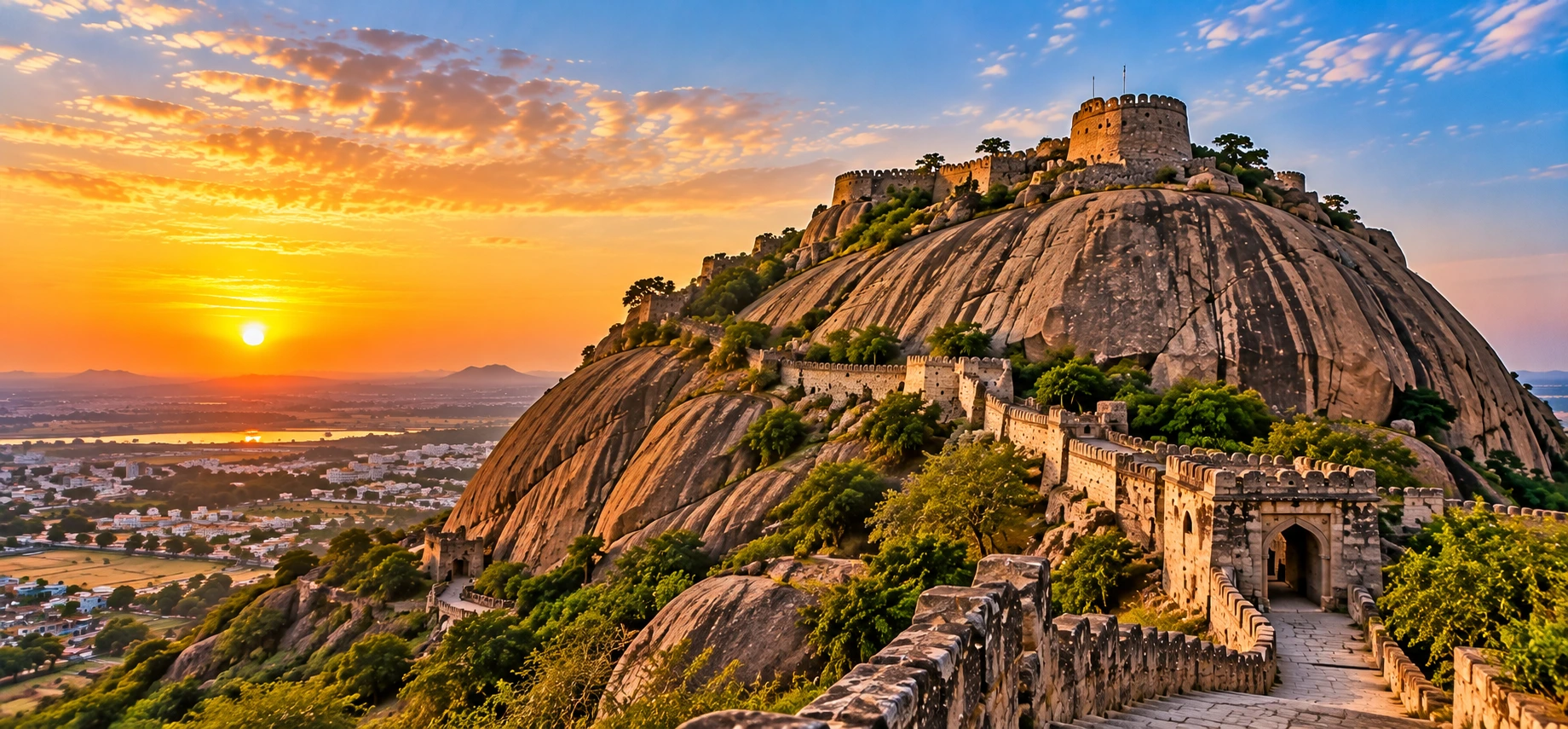
A massive rock hill rising above the town forms the natural base of Bhongir Fort, a historic fortress in Telangana. The fort stands in Bhongir, also known as Bhuvanagiri, about 48 kilometres from Hyderabad.
The Western Chalukya ruler Tribhuvanamalla Vikramaditya VI is associated with its construction during the 10th century. Its original name was Tribhuvanagiri, which later became Bhuvanagiri and Bhongir. The fort occupies an isolated rock formation known locally as Eka Sila, meaning a single rock.
The complex contains remains of stone walls, gateways, buildings, and structures linked to its military past. A climb towards the summit takes visitors through steep rock surfaces and old steps. The elevated position provides views of Bhongir town and the surrounding countryside.
Bhongir Fort also attracts adventure enthusiasts interested in rock climbing, bouldering, and rappelling. Telangana has promoted organised climbing activities here through its adventure tourism programme.
This destination suits history lovers, photographers, trekkers, and visitors planning a day trip from Hyderabad. The main drawback is the steep ascent over uneven surfaces, which requires reasonable fitness and suitable footwear.
History & Background
Bhongir Fort dates to the 10th century and is associated with the Western Chalukya ruler Tribhuvanamalla Vikramaditya VI. The fortress originally carried the name Tribhuvanagiri, reflecting its connection with the ruler. Over time, the name changed to Bhuvanagiri and eventually Bhongir. The town developed around the distinctive rock formation and took its name from the fort.
The fort's position on a steep, isolated rock gave it a strong defensive advantage. Its stone fortifications and elevated location helped protect the settlement and control movement across the surrounding region. Historical accounts also connect the fortress with the Kakatiya dynasty, including Queen Rudramadevi and her grandson Prataparudra.
Bhongir later became involved in the political struggles that shaped the Deccan. Historical records describe its capture during the expansion of Muslim rule into Telangana in the early 14th century. The fort subsequently became associated with the Bahmani kingdom and later regional powers. These changes reflect its strategic value rather than a single, continuous period of control.
The surviving structures include gateways, walls, and building remains that indicate the fort's military purpose. Some accounts also describe former royal quarters, storage areas, and underground spaces within the complex. The condition of these remains varies, and not every structure retains its original form.
In modern times, Bhongir became known for adventure tourism alongside its historical importance. Telangana's tourism authorities established a rock climbing school in association with Transcend Adventures in Hyderabad. The programme introduced supervised climbing training and other activities on the area's rock formations. No current UNESCO World Heritage listing or recent major award is established for the fort in the information used for this listing.
Architecture & Design
Bhongir Fort follows the natural shape of a large, isolated rock rather than a conventional flat site. The hill rises steeply above the surrounding land, creating a natural barrier against approaching forces. This setting is the most important feature of the fort's defensive design.
Stone walls and gateways follow parts of the rocky approach. The fort has two principal entrances described in regional tourism planning material as Matta Banda and Simha Banda. Their position and the difficult terrain helped restrict movement towards the upper sections. The remaining masonry reflects the practical needs of a military stronghold.
The elevated interior once accommodated buildings and facilities required for the fort's occupants. Historical and tourism descriptions mention palace remains, residential structures, storage spaces, and a Hanuman temple near the summit. Some structures survive only as ruins, so their original appearance cannot always be reconstructed from what remains today.
The rock formation itself serves as a natural defensive wall. Its steep sides make several approaches difficult, while the upper plateau provides a commanding view of the surrounding region. The combination of natural rock and constructed fortifications shows how the builders used the landscape to strengthen the site.
The fort's architecture developed across different historical periods. Later rulers used and modified the stronghold, leaving a complex shaped by changing military needs. Visitors should treat damaged walls and uneven stone steps as historic remains rather than modern walking surfaces.
Key Attractions Inside
Main rock hill: The isolated rock rises above Bhongir and provides the natural foundation for the fortress and its defensive position.
Stone gateways: The historic entrances mark the fortified approach and show how access to the upper complex was controlled.
Fortification walls: Remaining stone walls follow parts of the rocky slope and illustrate the site's defensive layout.
Summit viewpoint: The elevated sections provide views across Bhongir town and the surrounding countryside on clear days.
Hanuman temple: A temple near the hilltop adds a religious feature to the historic fort complex.
Historic building remains: Ruined structures inside the fort indicate the former use of the hill as a fortified settlement.
Rock climbing terrain: The exposed rock surfaces support organised adventure activities, including supervised climbing and rappelling where available.
Historical Significance
Bhongir Fort matters because it records the military and political history of the Deccan across several centuries. Its association with the Western Chalukya ruler Tribhuvanamalla Vikramaditya VI places its origins in the 10th century. The original name, Tribhuvanagiri, later changed into forms that became Bhuvanagiri and Bhongir.
The fortress gained importance because its isolated rock offered a strong defensive position. Its walls, entrances, and steep approaches helped protect the site. The fort is also associated with the Kakatiya period, including Queen Rudramadevi and Prataparudra, whose rule shaped the region's political history.
Historical accounts describe changes in control during the expansion of the Delhi Sultanate and the rise of the Bahmani kingdom. These events show the fort's role in struggles for control over Telangana and neighbouring territories.
Today, the site connects heritage tourism with outdoor activities. The Telangana government includes Bhongir among the region's adventure destinations and has promoted supervised rock climbing training here. The fort also remains an important local landmark because the town's name developed from its historic identity.
Best Time to Visit
October to February is generally the most comfortable season for visiting Bhongir Fort. Temperatures in Telangana are usually more manageable during these cooler months, making the uphill walk less demanding than in the hot season.
Early morning is a practical choice because visitors can begin the climb before the day becomes warmer. The natural rock offers limited shade along exposed sections, so the heat can make the ascent tiring during warmer months. Clear weather can also improve views from the upper fort.
The summer period, especially April and May, can bring intense heat. Monsoon conditions can make exposed rock and steps slippery, increasing the risk of falls. Visitors planning rock climbing should follow the operating schedule and safety guidance of the activity provider.
Weekends and public holidays can attract families, trekking groups, and adventure visitors. A weekday visit can provide a quieter walk, although crowd levels vary.
Timings
The listed visitor hours for Bhongir Fort are 10:00 a.m. to 4:30 p.m. daily. Some travel listings show a closing time of 5:00 p.m., so the last permitted entry time is not consistently established.
The ascent takes place over uneven rock and old steps. Arriving earlier within the listed opening period gives visitors more daylight for exploring the upper sections. Do not plan to begin a long climb close to closing time.
Rock climbing and rappelling are separate activities from ordinary fort entry. Their schedules, course lengths, and availability depend on the operator and training programme.
Prices, hours and menus can change, so readers should check the official website before they go.
How to Reach
By air: Rajiv Gandhi International Airport in Hyderabad is the main airport for visitors travelling from other cities. From the airport, travel towards Hyderabad and continue east towards Bhongir on the road network connecting with NH 163.
By train: Bhongir Railway Station is the nearest railway station. Regional tourism planning material places it approximately 2 kilometres from the destination. From the station, continue towards the fort by local transport or on foot, depending on the route and conditions.
By bus: Bhongir is connected to Hyderabad and nearby towns by road services. The main bus stand is approximately 2.5 kilometres from the destination in regional planning material. Local transport can cover the remaining journey.
By road: Bhongir is about 48 kilometres from Hyderabad. NH 163 connects the wider area with the Hyderabad and Warangal road corridor. Follow local directions towards Bhuvanagiri Fort or Bhongir Fort.
Guided Tours & Audio Guides
Nearby Attractions
Sri Lakshmi Narasimha Swamy Temple, Yadagirigutta: A major pilgrimage destination that adds a religious stop to a Bhongir day trip.
Kolanupaka Jain Temple: A historic Jain religious site associated with the area's long tradition of worship and stone architecture.
Bhongir town: Explore local streets and everyday town life around the historic hill.
Bhuvanagiri Railway Station: A useful transport landmark for visitors arriving by train and travelling onwards to the fort.
Where to Stay & Eat
Stay
Hotel Sannidhi Emerald (Yadagirigutta Road, mid-range): An accommodation option in the wider area for visitors combining the fort with a pilgrimage visit.
Local lodges in Bhongir (budget): The town has lodging options that can suit travellers looking for a short overnight stay near the fort.
Hotels in Hyderabad (upscale): Hyderabad provides a wider choice of full-service accommodation for visitors planning a day trip to Bhongir.
Eat
Local tiffins: Idli, dosa, and other breakfast dishes are common options at eateries in Bhongir town.
South Indian meals: Local restaurants serve familiar rice-based meals and vegetarian dishes.
Telangana-style meals: Roadside eateries around the wider highway corridor provide regional meal options.
Tea and snacks: Small town eateries offer simple refreshments before or after the uphill walk.
A current, verified restaurant menu specific to the fort itself is not publicly listed.
Suggested Visit Itinerary
First 15 minutes: Arrive at the base of Bhongir Fort, identify the uphill route, and prepare water and suitable footwear.
Next 30 minutes: Begin the climb along the available steps and rocky approach, taking breaks where the route allows.
Next 30 minutes: Explore accessible stone gateways and surviving fortification walls without climbing on damaged masonry.
Next 30 minutes: Walk through accessible upper sections and view the remaining historic structures.
Next 20 minutes: Spend time at the summit viewpoint and visit the Hanuman temple if it is accessible.
Final 30 minutes: Descend carefully and return to Bhongir town for refreshments or onward travel.
This itinerary is a planning outline, not a guaranteed route schedule. The actual time depends on the accessible path, visitor fitness, and site conditions.
Bhongir Rock Climbing
Bhongir rock climbing is an adventure activity associated with the steep granite rock formation beneath the historic fort in Telangana. The area has been used for climbing instruction, bouldering, and rappelling. Telangana's adventure programme describes a rock climbing school established with Transcend Adventures, a Hyderabad-based operator. The training programme includes basic climbing techniques, safety procedures, supervised practice, and injury prevention.
A basic rock climbing course is described as a five-day programme, while an advanced course lasts four days and requires successful completion of the basic course. A weekend adventure course and a one-day outing are also described in the regional tourism information. These activities are different from simply walking up to the fort. Participants should use trained instructors and suitable safety equipment. Current booking arrangements, fees, and operating dates are not publicly listed here.